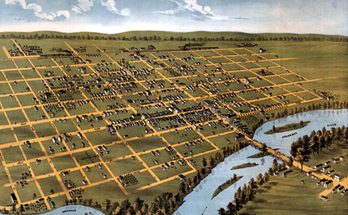
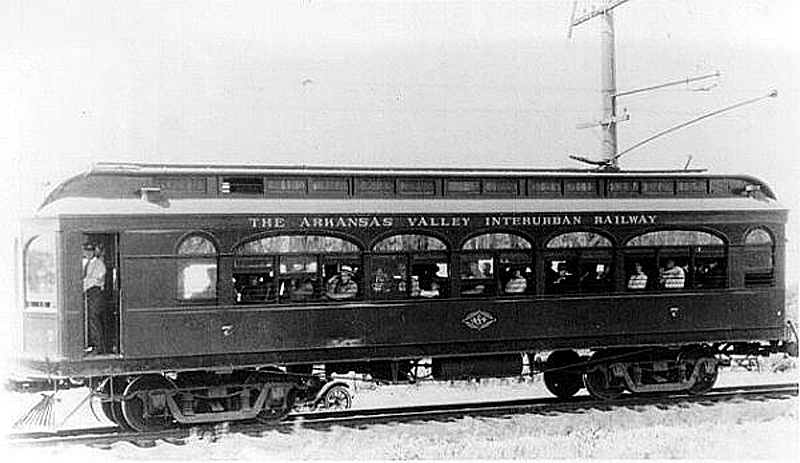
As the 20th century ran through its first decade, Wichita was obviously the biggest city in the region, but numerous outlying communities were doing well, too, and voluminous trade among these localities was an everyday reality. Though automobiles were beginning to become more commonplace, most people still relied on either horse-drawn buggies or streetcars for their around-town transportation; those coming in from outside the city limits were lucky if there was a regularly-scheduled steam train that would take them into Wichita.
In 1909 a group of 19 men pledged $100,000 toward the goal of building an electric rail line connecting Wichita to the smaller burgs of Valley Center, Sedgwick, Norton, Halstead, Burrton and Hutchinson. Two of these men each contributed $20,000. One was William Van Arsdale, a former cattle rancher who had made a small fortune for himself in the insurance business. The other was George Theis, Jr., a self-made millionaire who had worked his way up from a clerk making eight dollars a month to the owner of a bank and investor in a number of growing industries.
By March 1910, work on the rail line, originally to be called the National Interurban Railway but renamed the Arkansas Valley Interurban (AVI), had begun in earnest. The ceremonial spiking of the first rail took place on May 19th of that year, at the corner of 23rd & Main. In June the state’s board of railway commissioners gave the AVI permission to issue over two million dollars in bonds to cover construction costs.
Only three months after the first piece of rail was laid, a steam-driven train ran the finished length of the line between Wichita and Valley Center, carrying workers and supplies north to start laying the steel from there toward the town of Sedgwick. None of the overhead wiring that would be needed to drive the AVI’s electric cars had yet been installed.
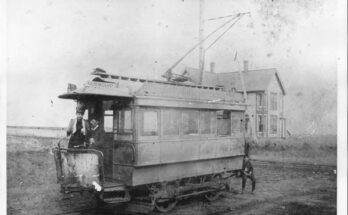
According to the October 18, 1910 edition of the Wichita Beacon, the first electric car on the AVI line made the journey that morning from Main & Douglas in Wichita to the substation in Valley Center carrying 30 officials of the railway, various businessmen and “four ladies.” The car in question was a Wichita streetcar (Car No. 201) borrowed for the purpose of testing the electrical system along the length of the line. The trip took 35 minutes: 10 minutes between downtown and 21st Street and the remaining 25 in the open country between 21st and Valley Center. This speedy voyage was considered a great success all around.
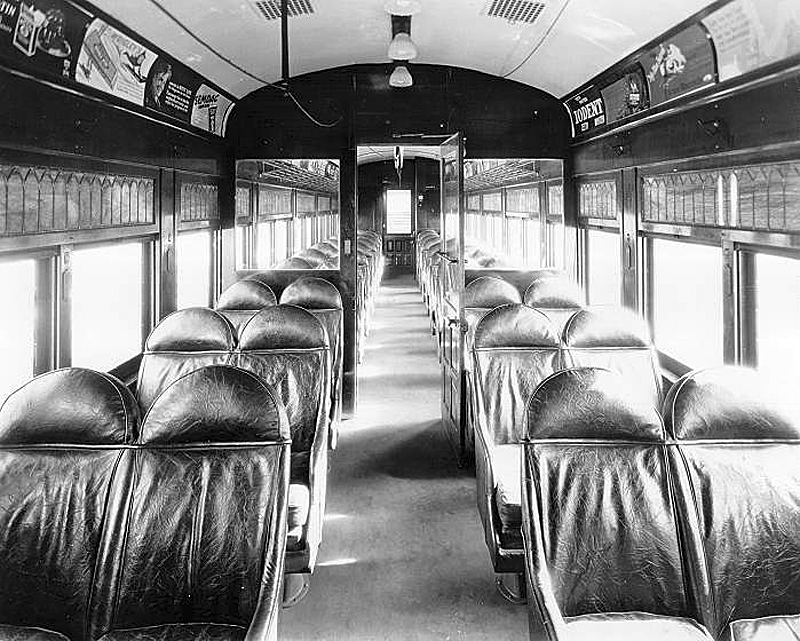
A scant month later, at 9:00 a.m. on Saturday, November 19, the Ark Valley Interurban officially opened with the maiden voyage of Car No. 1, carrying rail officials and other local civic leaders and driven ceremonially from Douglas to 21st by Wichita streetcar superintendent W.R. Morrison. Upon reaching 21st Street, Morrison handed over control of the handsome, custom-made car (designed to carry both freight and passengers) to motorman W.A. Faulkner, who made the rest of the trip to Valley Center in only 20 minutes. At the Valley Center depot, where the electrical wiring ended, Car No. 1 was hooked to a steam engine, which hauled it up the new stretch of line all the way to Sedgwick.
At 2:00 p.m. that same day, regular service began, with Cars No. 1 and No. 2 leaving the downtown Wichita terminal every two hours. After seven days in operation, the line was reported to have hauled 4266 passengers, with over 1200 on Sunday of that week and nearly 1100 on Thursday, which was Thanksgiving. On average there were some 600 fares a day. A few weeks later, on Dec. 16, regular service all the way between Wichita and Sedgwick began.
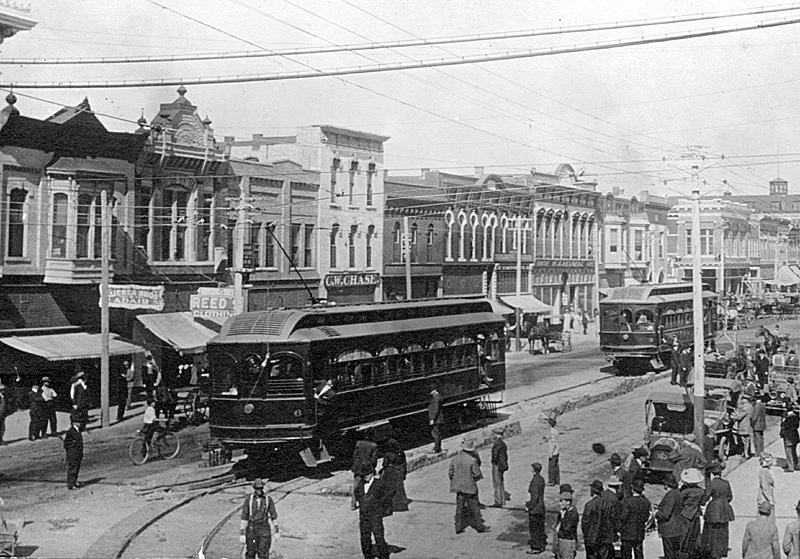
Soon after, work began to extend the line to Newton, then Halstead. By Dec. 20 of 1911, both of those cities were being served, with trains reaching speeds of up to 55 miles per hour on some stretches of track. Monthly ridership on the AVI was averaging 30,000 fares at this point, not to mention dozens of cars worth of freight, and the rail line’s board sought more expansion yet. In June 1912 it announced plans to continue laying rails through Burrton to Hutchinson.
A month later there were 12 cars running the length of the AVI, and on peak days over 7,000 people rode them; the line kept breaking records, carrying 57,501 paying customers in July 1911, then 61,508 the next month. Two years into operation, the Ark Valley Interurban had expanded from nine miles of track to nearly 35, with 15 cars running 32 round trips a day. The workforce of eight employees had swollen to 65, and the whole organization had cumulatively carried 751,093 passengers a total of 712,782 miles.
The line expanded again in 1913, adding a short spur from Newton north to Bethel College; the AVI would not reach Hutchinson until 1915, after long negotiations with that city’s local startup rail line.
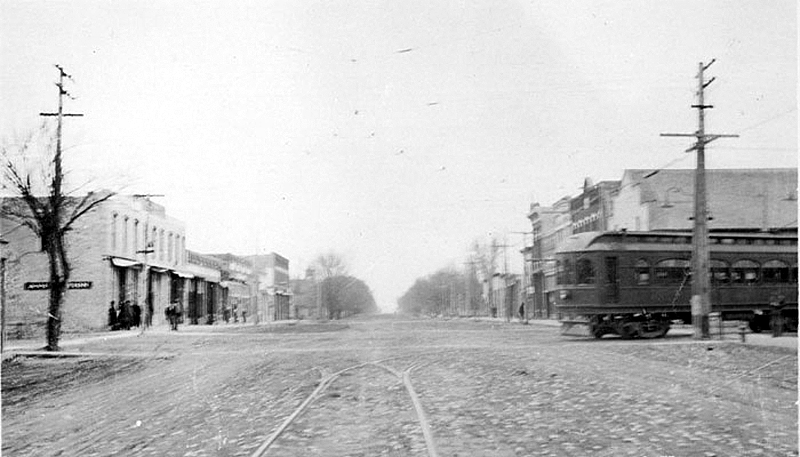
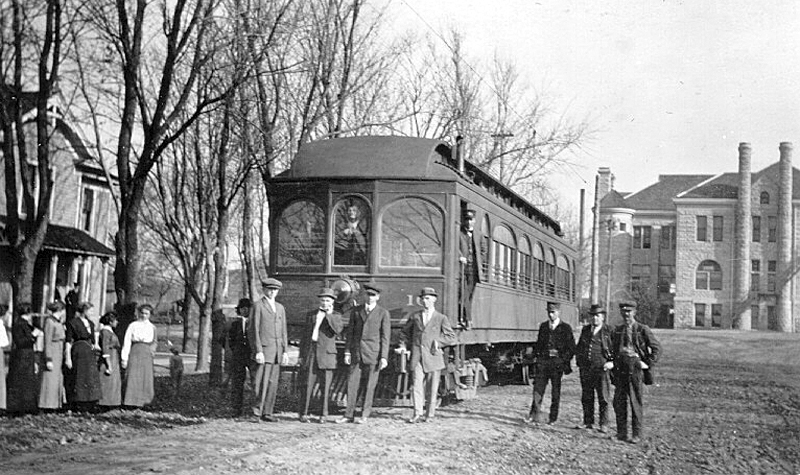
As passenger and freight traffic increased steadily, the AVI began creating headaches near its downtown Wichita terminus at First & Water. In the October 17, 1917 edition of the Eagle appeared the following notice: “Hardly a day passes that some complaint is not heard about the way the Arkansas Valley Interurban company ties up traffic at 1st and Main streets. Interurban cars stop at the near side of the intersection to unload passengers. This halts southbound street cars and vehicle traffic and when the Interurban car is loaded the delay is stretched to the annoying point.”
It was not long after this that the AVI secured a lease on the property at the northwest corner of Douglas & Waco, with plans to build a new depot. The land at that time was occupied by a pair of feed barns. By 1920 the rail line had also secured a lease on the abandoned Wonderland Park on Ackerman Island (see March 13, 2013 edition of F5), where it would build maintenance sheds in which to house and service its cars. In August that year, local construction honcho George Siedhoff announced “plans for a new five-story hotel with 156 rooms to be built at Douglas and Waco avenues beside the Arkansas Valley Interurban station and to be known as the White House.” (Wichita Eagle.)
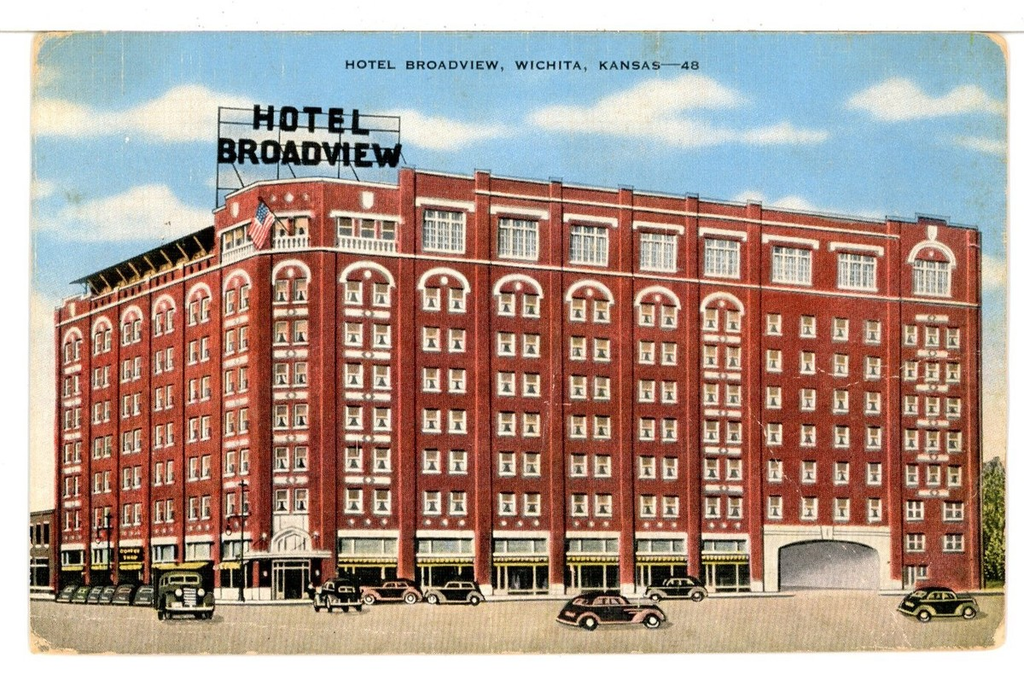
The White House name fell by the wayside quickly, and the size of the planned hotel increased. By its grand opening on June 1, 1922, the finished Broadview Hotel was a seven-story building with 240 rooms. Siedhoff, an aviation enthusiast, drew attention to the hotel in its early years by sponsoring air-themed events and hosting famous aviators such as Charles Lindbergh. In 1929 the Broadview saw a 78-room addition on its north end, routing the AVI line through the extended wing of the building.
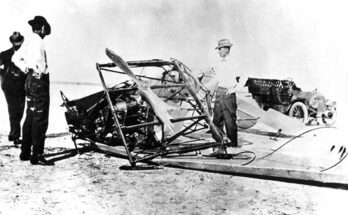
At its peak in 1920, the Ark Valley Interurban carried one million fares, but times were changing. The public was relying less and less on public forms of transit, and ridership decreased as each year wore on. By 1924, only 600,000 fares were taken, with operating expenses remaining steady and taxes on the railway increasing threefold. Meanwhile at AVI headquarters, the old guard were dying out. The line’s co-founder Van Arsdale suffered a heart attack at his newly-built palatial estate on the corner of First & Broadview in College Hill in 1924. His partner, Theis, died a horrific death, walking into an airplane propeller in full view of his wife and two sons at the Wichita airport in 1926. The unfortunate pilot was none other than Lloyd Stearman (see “Air Capitalization” for more).
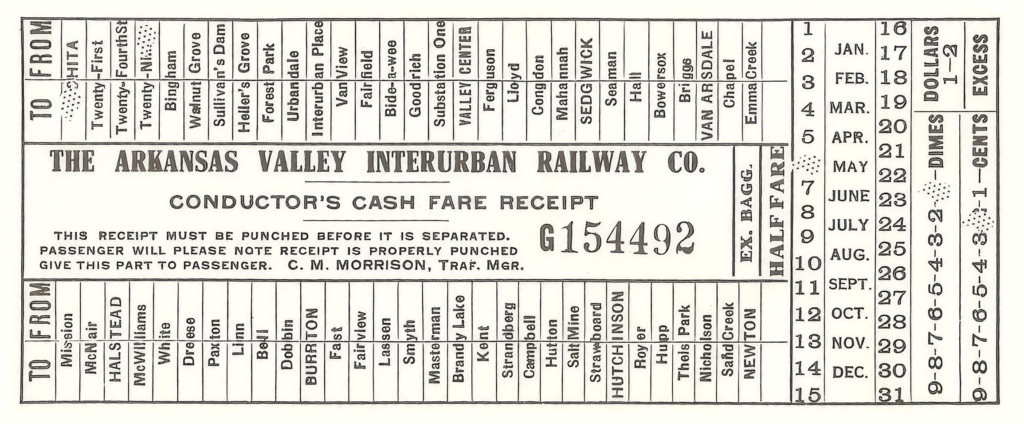
Desparate to keep their share of the transportation business, the AVI experimented with running its own bus line, but sold its interests in that venture within a couple of years. The company slowly began a long circling of the drain, and the Great Depression only accelerated the downward spiral. On Monday, August 1, 1938, the Wichita Eagle reported: “After nearly 27 years, the Arkansas Valley Interurban Railroad yesterday discontinued its passenger service between Wichita and Hutchinson. The company will continue its freight service…the company showed that the passenger business had dropped from 95 percent of the revenue to five percent…”
The line was still used to haul freight, and in late 1939 was sold to another company and renamed the Arkansas Valley Railway. The new outfit introduced diesel trains to the line. On October 20, 1940, electric trains ran for the last time on the old AVI rails; shortly thereafter the overhead wires were torn down. Just over a year later, America entered World War II, and the nation found itself in dire need of scrap metal to use in the production of guns, planes, tanks and ships. In July 1942 the War Production Board ordered the Ark Valley Railway to pull up its rails and turn them in to support the war effort.
The old AVI depot adjacent to the Broadview was utilized for some years thereafter as the headquarters of the Derby Refining Company, but in 1961 the hotel’s owners demolished the smaller building in order to expand its ballroom and add a swimming pool. The Broadview has since gone through numerous owners and makeovers, and today is operated by the Drury hotel chain. The freight station entry to the building is now occupied by the AVI Restaurant, named in honor of the short-lived electric railway that gave birth to the hotel.
Wichitarchaeology is a series of Wichita history columns originally posted in F5 Weekly. These articles are being presented here as they originally appeared, in some cases with additional photos, supporting links and/or addenda providing updated information. Unless otherwise identified, photographs courtesy of the Wichita-Sedgwick County Historical Museum. This post was first published 5/30/2013.