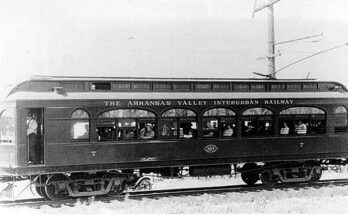
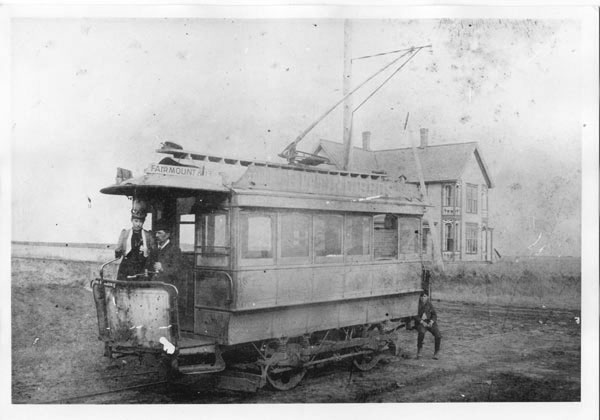
As Wichita grew from a cowtown into a proper metropolis, it found itself, like many young American communities of the late 19th Century, faced with a need for public transportation. The city was expanding beyond comfortable walking distance for citizens looking to do some trade downtown or seek an evening’s entertainment, and the automobile was still but a distant dream.
In 1883 one Colonel J.W. Hartzell, builder of the streetcar system in Topeka, retired as president of that city’s trolley line and took up residence in Wichita with the intention of creating a similar line here. (He also bought what is now Riverside Park and established it as such, but that is a story for another edition.)
Hartzell made short work of it. In January he attended a meeting of the board of the Wichita Street Railway Corporation. In March he made a pilgrimage to the east to buy cars and iron, and according to the Wichita Eagle, “…the street railway cars made their first run in this city Saturday, May 19th, 1883 at 11:00 p.m. There are three cars running at present, leaving either depot every 15 minutes. The cars are very fine, and the horses number one.” By November the line had doubled the number of round trips it made each day.
A year later, in August 1884, Hartzell sold the entire street railway to one Captain E. R. Powell, described in a contemporaneous Eagle story as “a pleasant, genial gentleman, having been for years captain of a large ocean vessel.” Powell wasted no time at all expanding the line into one of the most profitable city trolley companies in the Midwest.
But with every gain there must come some pain; in December of that same year the Eagle reported that the streetcars running from the railroad depots were overrun with boisterous barkers promoting local hotels and restaurants: “The hotel runners of this city are getting so annoying on the street cars coming from the trains that many persons prefer to walk rather than be annoyed by the howling dervishes who represent every one-horse restaurant and boarding house in town. Something ought to be done to protect people on the street cars against such a babel of shouting, solicitations, and coarse slang as is indulged in all the way from the Union to the Santa Fe Depot.”
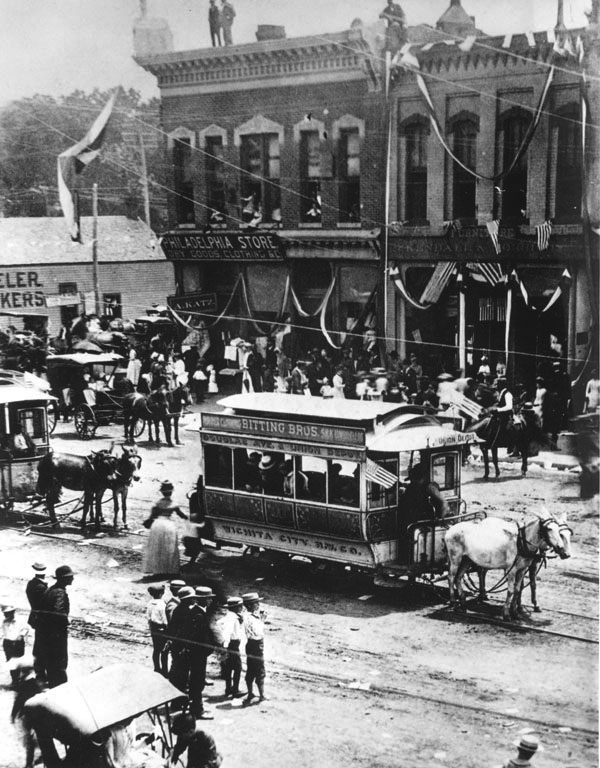
The streetcar system survived in spite of such grievances, replacing mules and horses with electric cars by 1892. In that year came Wichita’s first electrified streetcar fatality, when a car crushed the legs of a farmhand named Estes from North Carolina who had fallen asleep drunk across the tracks on North Topeka.
In 1897 the streetcar company was taken over by new owners and expanded further. The earliest bits of the line were beginning to show wear; when William Jennings Bryan spoke at the fairgrounds in Shuman (now Riverside) Park, every car had to be pressed into service, and the Elm Street trolley bridge wobbled so under the weight of the overloaded cars that authorities closed it for fear it would collapse into the river.
1902 saw the rather ironic death of good Captain Powell, whose runaway horse and buggy crashed near Third and Topeka — hurling him headfirst onto the cold steel streetcar rail.
Competition reared its head in 1916 when jitney buses, charging a nickel a ride, began springing up. The city passed an ordinance requiring operators of these vehicles to pay a license fee when they worked streets already being served by trolleys. In that same year the streetcar line expanded further, painting its existing cars and adding new ones, while also laying down new track, extending existing street routes. The company was also sued by the city for failure to pay its share of revenues into the public coffers for the years 1903 through 1915, estimated at roughly $70,000.
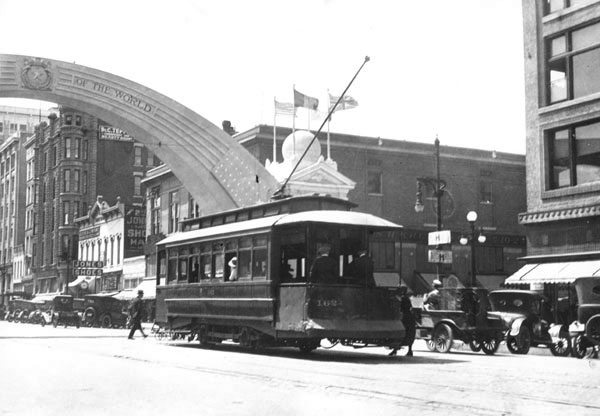
As personal ownership of motor vehicles became more commonplace, use of the public trolley line declined. Through the 1920s into the early 1930s the streetcar system fell on progressively harder times, and by January of 1934, it was decided that the city would experiment with running buses in place of the electric cars on lines west of the river. In August of that year the Eagle published an editorial opining that “the street car has been outmoded in cities the size of Wichita. There should be a reorganization of the transportation system and the over-capitalized street car company of the old days should be wiped off the books and its place taken by a bus system capitalized at a reasonable figure which will permit buses to operate at a five cent fare.”
On Saturday, June 29, 1935, 40 passengers took one last farewell trip from College Hill over the Riverside, Stockyards and Wichita University rail lines, and the last streetcar was shut up in the trolley barn for good. A gentleman named John Stamps was the motorman for the occasion.
In November 1935 a group of some 700 men were assigned by the Works Progress Administration (WPA) to take on public works projects in Wichita; 300 of them were assigned the task of tearing out Wichita’s 33 miles of abandoned streetcar rails and the various bridges and electrical wiring associated with the defunct trolley system.
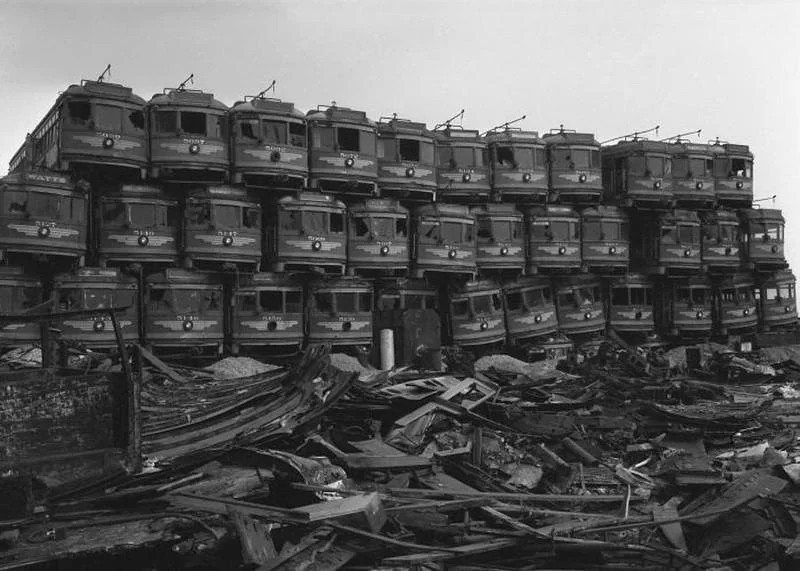
Streetcars were disappearing all over the nation, not just in Wichita — but this phenomenon wasn’t entirely organic. A cabal of corporations including General Motors, Firestone Tire, Standard Oil, Phillips Petroleum and Mack Trucks — under the guise of a public transit concern — had by 1950 purchased some 100 streetcar lines in 45 other American cities and scrapped them as well, for the express purpose of replacing them with petroleum-powered buses and personal automobiles. By the mid-1950s, agents associated with this organization had effectively wiped out 90% of America’s electric public transit. When convicted in court for violating federal anti-trust laws, one of the chief architects of this skullduggery was fined the princely sum of one dollar.
Wichitarchaeology is a series of Wichita history columns originally posted in F5 Weekly. These articles are being presented here as they originally appeared, in some cases with additional photos, supporting links and/or addenda providing updated information. Unless otherwise identified, photographs courtesy of the Wichita-Sedgwick County Historical Museum. This post was first published 5/9/2013.