Wichita has long been known as the Air Capital of the World, yet many today may be unaware of just exactly how long. The city’s air history has roots running over 100 years back in time.
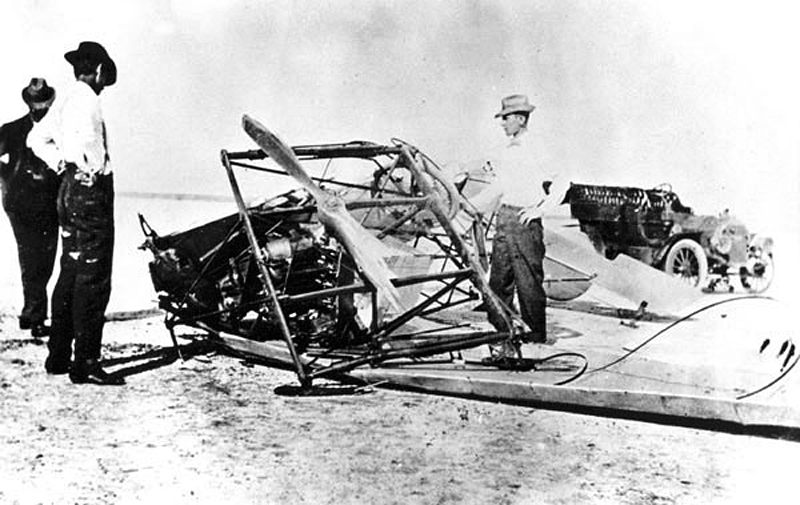
In 1910 a farm boy from Rago, Kansas saw an early aerial exhibition and was bitten by the aviation bug. He trekked to New York and took a job at the Queen Aeroplane Company, where he learned the basics of airplane construction. A year later found him living in Enid, Oklahoma, where he built his very own rudimentary aircraft using a modified 40-horsepower motorboat engine. This plane, dubbed the Silverwing, was tested unsuccessfully on the Great Salt Plains of Oklahoma 13 times before finally slipping the surly bonds of Earth and taking to the sky. By December 1911, the “Birdman of Enid” had made a successful five-mile flight and the taunts of the townspeople had turned to cheers of admiration. The young man’s name was Clyde Vernon Cessna.
Cessna built numerous other small planes and took to flying them at exhibitions around Kansas and Oklahoma. By 1916 he had a small factory set up in Wichita and was training other pilots, then sending them out on the exhibition circuit. But when America entered World War I shortly thereafter, the business dried up. Cessna went back to the plow on his old family farm in Rago and waited for the tide to turn.
And turn it did. The extensive use of airplanes in the war spurred development and demand for newer, faster and more powerful machines, and aeronautical technology advanced by leaps and bounds. In 1920 budding air magnate E.M. Laird, along with oil-rich Jacob Mollendick and local auto dealer W.A. Burke, bought out the barely-hatched Wichita Aircraft Company and began cranking out the legendary Laird Swallow airplanes in respectable numbers. This drew to Wichita the attention of an air-obsessed nation.
In 1924, in hopes of cashing in on that attention, Wichita’s Chamber of Commerce enlisted local civic organizations to raise money to host a National Air Congress. Pilots, builders, hobbyists and avation fans were invited from coast to coast to participate or just spectate in one of the biggest air events the world had ever seen at the time. 100,000 people attended the congress that October, and truly epic levels of networking ensued.
Three months later Clyde Cessna was back in business, along with his new partners, veteran airmen Walter H. Beech and Lloyd Stearman. Their firm, the Travel Air Manufacturing Company, set up shop east of town on Central Avenue, and immediately began setting the industry on its ear.
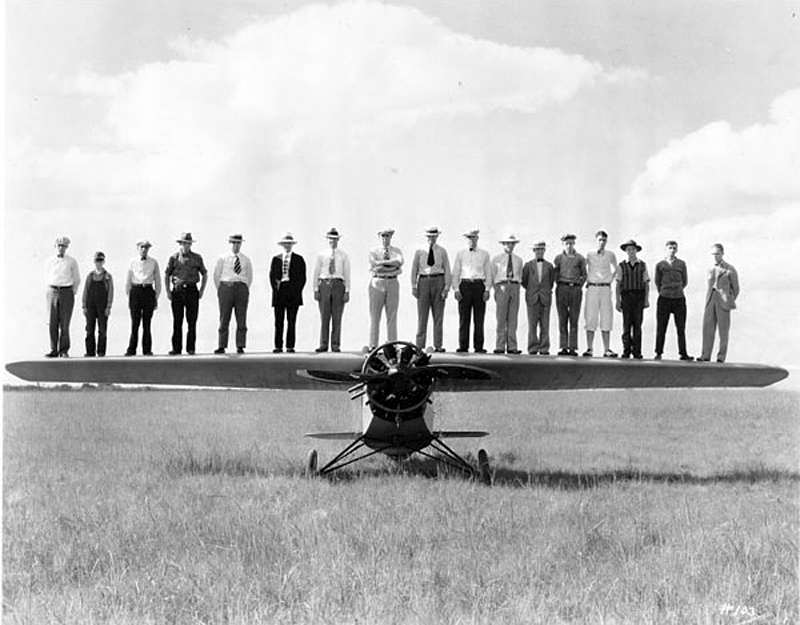
Besides building new planes intended for the nascent passenger air travel business, mail delivery and other workaday purposes, the company launched a program of custom-designed race planes with the intention of beating the tar out of the best military models in air races. So secretive was Travel Air about the development of these special race planes that the company painted the skunkworks windows so that nobody could see inside. The local press dubbed these planes “Mystery Ships” and delighted in reporting on their breathtaking feats of aerial performance.
Then came the catastrophic Dole Air Race, a prize dash from Oakland, California to Honolulu that claimed the lives of ten pilots and crew in 1927. Out of a field of fifteen planes entered, only eight actually made it to the starting line on race day, and only two crossed the finish line. The winner: A Travel Air 5000 called Woolaroc, flown by Hollywood stunt pilot Art Goebel. What had begun as a lark inspired by Lindbergh’s trans-Atlantic flight had ended in disaster.
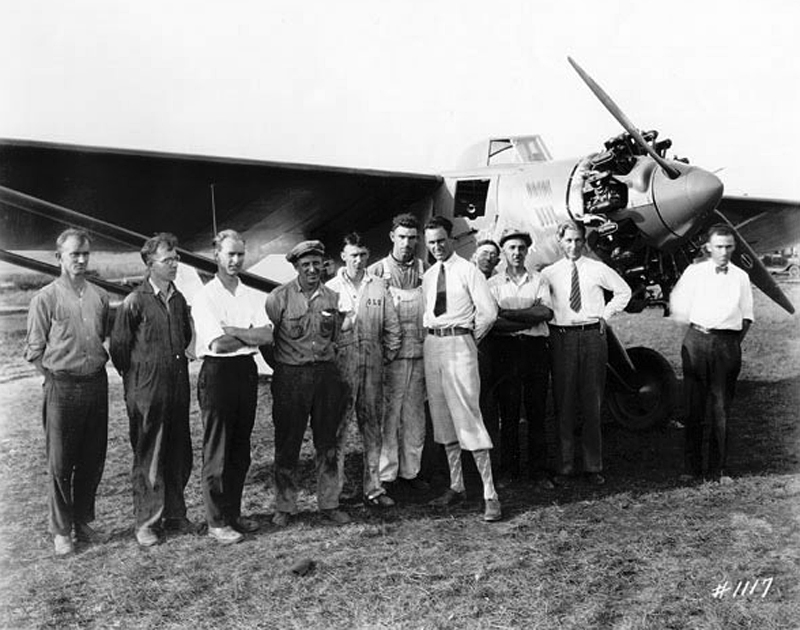
And speaking of disaster, the great stock market crash of 1929 was just around the corner. The “Lindbergh Boom” had inspired many people to invest in startup aircraft companies in the months leading up to the crash, and virtually all of those new organizations went out of business within a year. In Wichita alone, dozens of aeronautic firms came and went between 1927 and 1931, including Ace Aircraft Manufacturing, Associated Aircraft, Air Capital Manufacturing, Beach (not Beechcraft) Aviation, Blue Streak, Bowlby Airplane, Braley Aircraft, Buckley Aircraft, Continental Aircraft, Geselle Aircraft, Hilton Aircraft, Wichita Imblum Aero Corporation, Jayhawk Aircraft, Knoll Aircraft, Laird Aircraft, Lark Aircraft, Lea Aircraft, Lear Aircraft (not Learjet), Metal Aircraft Corporation, Miller Aircraft, Mooney Aircraft, C.M. Mulkins Company, Okay Airplane, Poyer Motor Company, Quick Air Motors, Roydon Aircraft, Red Bird Aircraft, Rawdon-Burnham Company, Shilberg Aeroplane Company, Self Aircraft, Steamboat Aircraft, Straughan Aircraft, Swift Aircraft, Sullivan Aircraft Manufacturing, Supreme/Stone Propeller Company, Vanos Aircraft Corp, Wichita Airplane Manufacturing, Watkins Aircraft, Winstead Bros. Airplane, Yellow Air Cab and Yunker Aircraft.
Stearman and Cessna both left Travel Air, each to start his own eponymous company; Beech stayed with Travel Air as it was absorbed by the conglomerate Curtiss-Wright, but became dissatisfied with his position there and struck out on his own, reopening the old factory on East Central. When he became incapacitated by encephalitis in 1940, his wife and partner Olive Ann Beech took the reins, becoming the first woman to head a major aerospace manufacturing company. Today, after going through periods under the names Raytheon and Hawker-Beechcraft, the company is once again operating under the tried-and-true Beechcraft moniker. [2026 Update: Both Beechcraft and Cessna are both now owned and operated by Textron Aviation.]
Wichita would go on to draw more of the heaviest hitters in aviation, including Boeing (emerging from Stearman), Learjet and even the European firms Airbus and Piaggio. The demand for Boeing’s B-29, B-47 and B-52 bombers during and after World War II created so many jobs that Wichita saw one of the biggest population explosions of any American city of the 20th century. And today, even with the loss of major Boeing operations and the continuously shrinking overall presence of the aerospace manufacturing industry in the city, the fact remains that over half of the general aviation craft built anywhere on Earth each year are produced here.
Wichitarchaeology is a series of Wichita history columns originally posted in F5 Weekly. These articles are being presented here as they originally appeared, in some cases with additional photos, supporting links and/or addenda providing updated information. Unless otherwise identified, photographs courtesy of the Wichita-Sedgwick County Historical Museum. This post was first published 5/16/2013.